The Strait of Hormuz and Oil Prices: What Investors Need to Know
Normally about a fifth of the world's oil sails through one narrow channel. Since late February 2026, that route has been largely shut. Here is why it matters for prices, stocks and the pump.
Key takeaways
- Before the crisis, about 21 million barrels a day passed through Hormuz, roughly 21% of world petroleum use (EIA, 2022 data).
- Iran closed the strait after the US and Israel struck it on February 28, 2026. Traffic has stayed far below normal since.
- Pipelines and shuttle tankers move part of the Gulf's oil around the strait, but not all of it, and they are targets too.
- Brent traded around $72 before the war and above $100 in mid-October 2026.
Why one strait matters so much
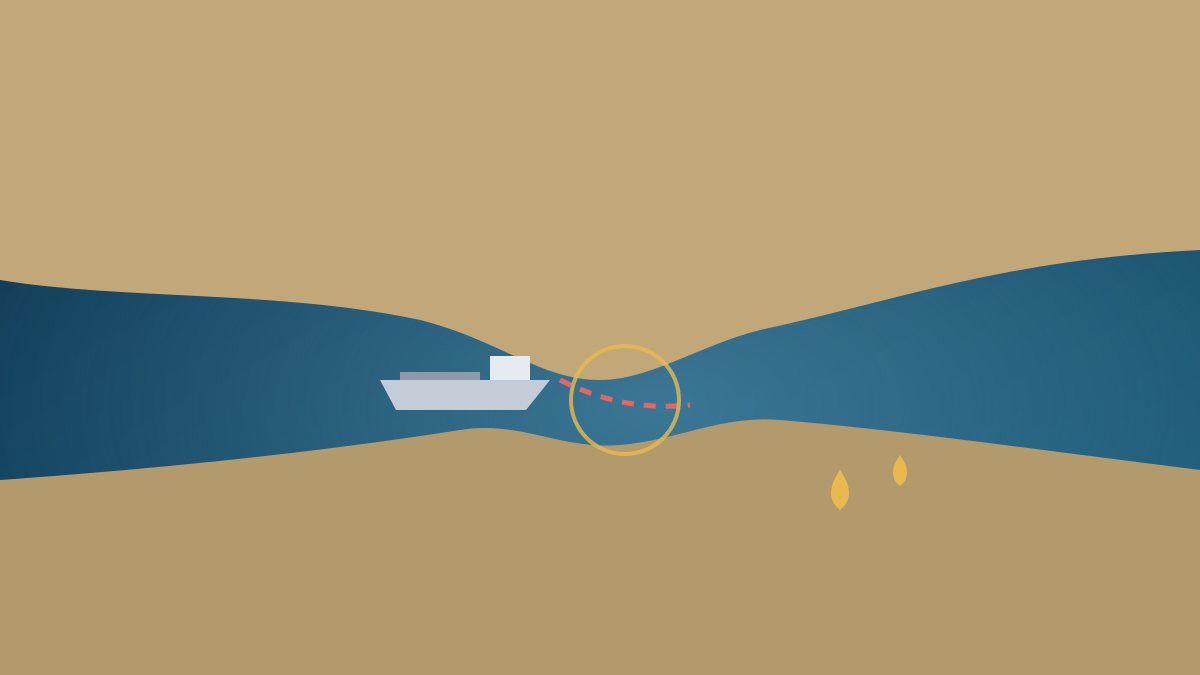
The Strait of Hormuz links the Persian Gulf to the Gulf of Oman and the open ocean. Saudi Arabia, Iraq, Kuwait, the UAE, Qatar and Iran ship most of their oil and liquefied natural gas through it. The US Energy Information Administration calls it the world's most important oil transit chokepoint: about 21 million barrels a day in 2022, plus around one-fifth of global LNG trade. Most of those barrels went to Asia, led by China, India, Japan and South Korea.
What happened in 2026
| Date | Event |
|---|---|
| Feb 28 | US and Israeli strikes on Iran. Iran declares the strait closed to foreign shipping. |
| Mar–Apr | US operations to reopen the strait, a ceasefire on April 8, then a US naval blockade of Iranian ports. |
| May 1 | The UAE leaves OPEC and OPEC+. See What Is OPEC+. |
| Jun 17 | A memorandum of understanding to end the war is signed; reopening is announced but not completed. |
| Sep–Oct | Gulf exports recover partly through bypass routes, while attacks on ships in and near the strait increase. |
In mid-October, ship-tracking data still showed only a handful of daily transits, compared with about 85 a day before the crisis, and Brent traded around $105 a barrel. This situation changes quickly; follow it on our oil market page.
The bypass routes
- Saudi Arabia's East-West pipeline carries crude to Yanbu on the Red Sea. EIA lists its capacity at 5 million barrels a day, temporarily expanded to 7 million in 2019.
- The UAE's pipeline to Fujairah, on the Gulf of Oman outside the strait, can move about 1.5 million barrels a day.
- Shuttle tankers move cargoes in smaller ships to larger tankers waiting offshore.
Those routes cannot replace the full flow, and pipelines and terminals have themselves faced drone attacks. Iraq and Kuwait have few alternatives.
How the crisis reaches prices
Lost and delayed barrels. Less oil reaches buyers, and inventories drain. Saudi Aramco's chief executive has estimated that about three billion barrels of supply have been lost.
Shipping and insurance costs. Tankers that do sail pay much more for war-risk insurance and charter rates, which adds to the delivered price.
A risk premium. Traders pay up for barrels that are not exposed to the Gulf, which widens price gaps between grades and regions, including the Brent-WTI spread.
Effects beyond oil
- Gasoline and inflation: energy feeds directly into the CPI report, which can keep interest rates higher.
- Stocks: energy producers have tended to benefit, while airlines, shippers and many consumer companies face higher costs. See How Oil Prices Affect the Stock Market.
- Gold: geopolitical risk has supported safe-haven demand.
- Natural gas: Qatar's LNG exports depend on the strait, which matters for Europe and Asia.
What to watch next
- Daily transit counts and reports of attacks on shipping.
- Any diplomatic agreement that includes guaranteed safe passage.
- Pipeline and terminal operations at Yanbu and Fujairah.
- Weekly US inventory data from the EIA, usually on Wednesday.
This article is general education, not personalized financial advice. Read our editorial policy and disclaimer.