The Energy Sector Explained: Upstream, Midstream and Downstream
Not all oil companies win when crude rises. Producers, pipelines and refiners make money in very different ways. Here is how the energy sector is organized.
Key takeaways
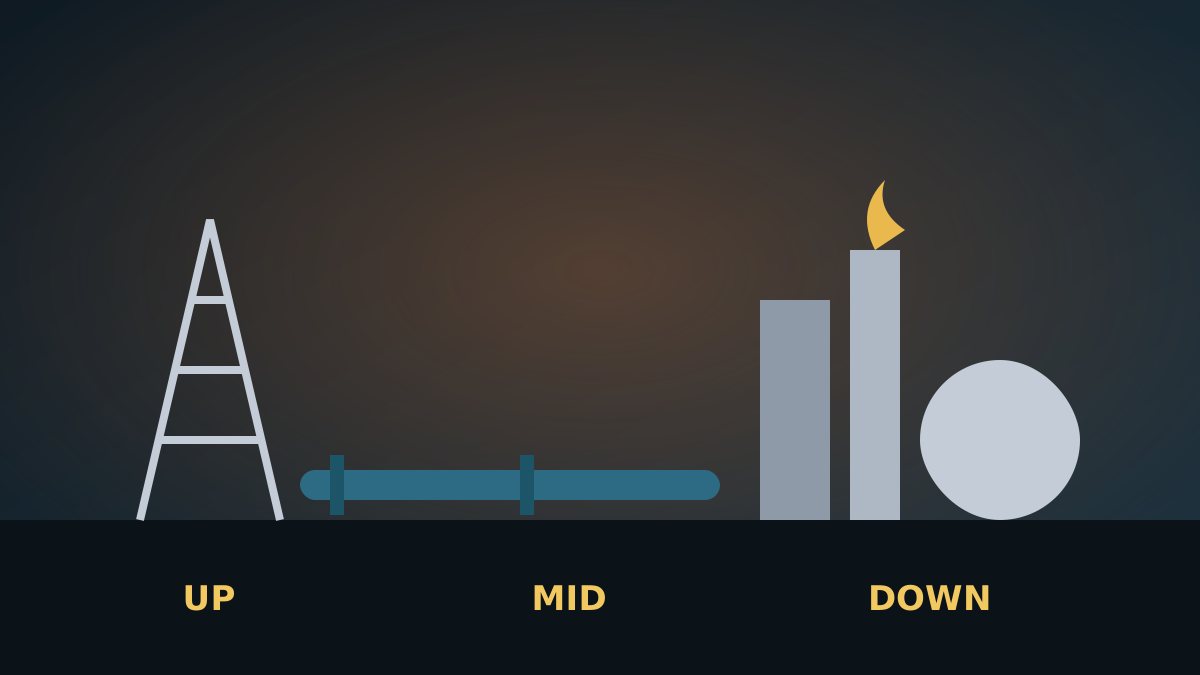
- Upstream companies find and pump oil and gas. Their profits rise and fall with commodity prices.
- Midstream companies move and store energy, often for fees, so they are steadier.
- Downstream companies refine and sell fuel. They profit from the gap between crude and fuel prices.
- Integrated majors do all three, which smooths their results.
The three segments
| Segment | What they do | What drives profits | Sensitivity to oil price |
|---|---|---|---|
| Upstream (exploration and production) | Find, drill and pump crude and natural gas | Oil and gas prices minus production cost | High |
| Oilfield services | Drilling rigs, equipment, well services | Producers' spending plans | High, with a lag |
| Midstream | Pipelines, storage, export terminals | Volumes and long-term fee contracts | Lower |
| Downstream | Refining and marketing fuel | Refining margin (crack spread) | Mixed |
| Integrated majors | All of the above | Balance across segments | Moderate |
Upstream: the purest bet on prices
Producers sell what they pump at market prices, but their costs are mostly fixed in the short term. When oil climbs, a large part of the extra revenue becomes profit. When it falls below their break-even cost, they can lose money quickly. That is why upstream stocks tend to swing the most.
Midstream: the toll road
Pipeline and storage companies are often paid per barrel moved or stored, under long-term contracts. Their income depends more on volumes than on prices, and many pay high dividends. Some are structured as master limited partnerships (MLPs), which have special tax reporting.
Downstream: the refining margin
Refiners buy crude and sell gasoline, diesel and jet fuel. What matters is the crack spread, the difference between fuel prices and crude prices. Refiners can do well even when crude is high, if fuel prices rise faster. Outages at other refineries also tend to help those still running.
What 2026 shows
The Strait of Hormuz crisis lifted crude prices, which tends to help producers outside the Gulf. At the same time, shipping disruptions and higher insurance costs affected companies that depend on Gulf supply, and fuel shortages in some regions widened refining margins. The effects differ company by company, depending on where they produce, ship and sell.
Energy in the bigger market
Energy is a fairly small share of the S&P 500 today, so even a strong energy rally has a limited direct effect on the index. Its bigger influence is indirect, through inflation and interest rates. See How Oil Prices Affect the Stock Market.
This article is general education, not personalized financial advice. Read our editorial policy and disclaimer.