Stock Market Correction vs. Bear Market: What's the Difference?
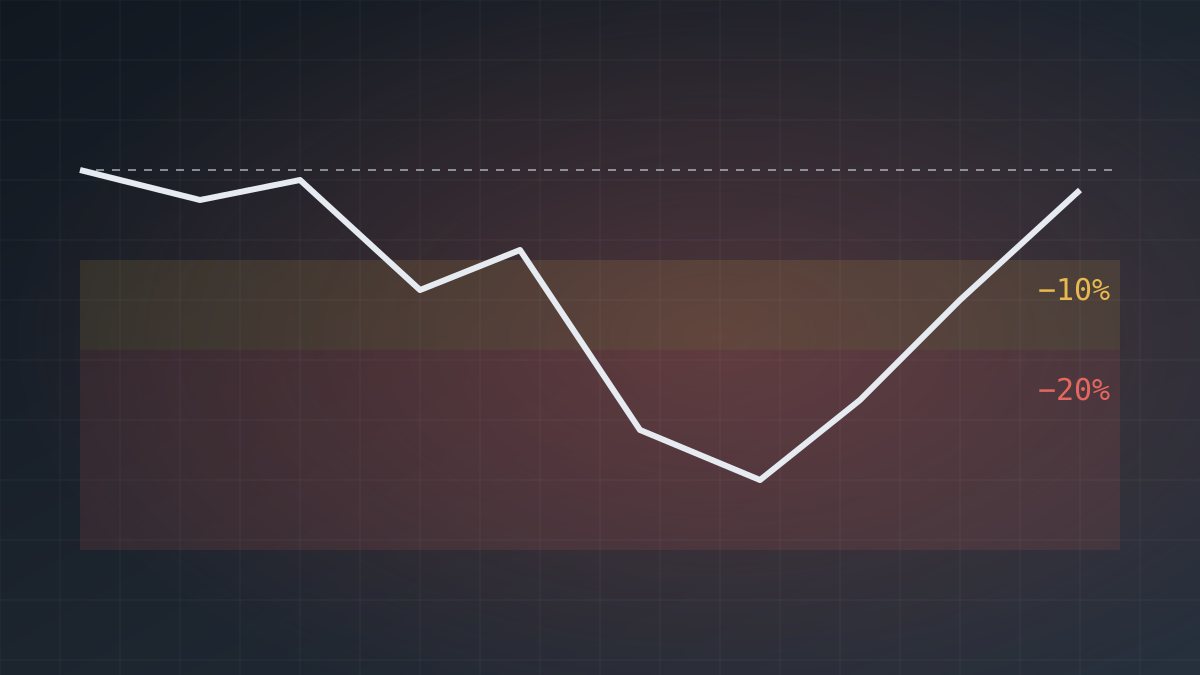
A 10% drop is a correction. A 20% drop is a bear market. Here is what each term means, how often they happen and how long investors have typically waited for a recovery.
Key takeaways
- A correction is a decline of at least 10% from a recent high. A bear market is a decline of at least 20%.
- Corrections are common and often end within a few months.
- Bear markets are rarer and have usually lasted longer, often alongside recessions.
- The thresholds are conventions, not official rules.
The definitions
| Term | Decline from recent high | Typical character |
|---|---|---|
| Pullback | 5% to 10% | Routine, often weeks |
| Correction | 10% to 20% | Common, often a few months |
| Bear market | 20% or more | Less common, often many months |
| Bull market | Rise of 20% or more from a low | Can last years |
These levels are usually measured on the closing price of the S&P 500. They are traditions used by investors and the media, not legal or official definitions.
Why markets fall
- Recession fears: lower expected profits. See Recession Warning Signs.
- Rising interest rates: lower valuations, especially for growth stocks. See How Interest Rates Affect Stocks.
- Shocks: wars, pandemics, financial crises or energy price spikes.
- Excess valuations: when prices run far ahead of earnings.
Notable US bear markets
| Period | Trigger |
|---|---|
| 2000–2002 | Dot-com bust, then recession |
| 2007–2009 | Global financial crisis |
| 2020 | COVID-19 crash, one of the fastest declines and recoveries on record |
| 2022 | High inflation and rapid interest rate hikes |
What investors usually do
Missing the best days of a recovery can cost long-term investors a lot, and many of those days come soon after the worst ones. That is why most long-term investors keep investing on a schedule through declines rather than trying to time the bottom. Dollar-cost averaging, explained in S&P 500 Index Funds, Explained, buys more shares when prices are low.
Money you need within a few years usually belongs in safer assets, so a downturn does not force you to sell at a loss. See how time affects growth in the compound interest calculator.
Past market behavior does not predict future results.
This article is general education, not personalized financial advice. Read our editorial policy and disclaimer.