American Gold Eagle vs. Buffalo vs. Maple Leaf: Which Gold Coin to Buy?
The most popular gold bullion coins all contain one troy ounce of gold, but they differ in purity, premium and resale. Here is how they compare.
Key takeaways
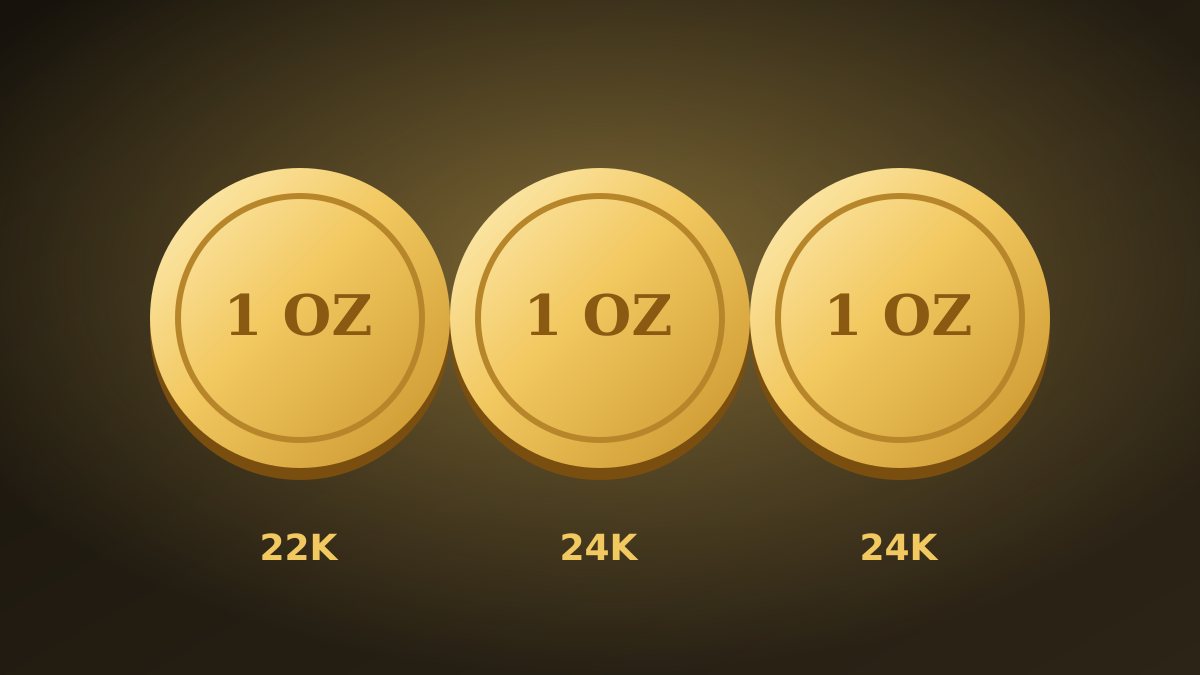
- Each of these coins contains one troy ounce of pure gold in its 1 oz size.
- 22-karat coins (Eagle, Krugerrand) add copper and silver for durability; 24-karat coins (Buffalo, Maple Leaf) are 99.99% pure.
- The price you pay is the gold spot price plus a premium, which varies by coin and dealer.
- Well-known coins are easy to sell back to any dealer.
The main bullion coins compared
| Coin | Issuer | Purity | Sizes |
|---|---|---|---|
| American Gold Eagle | US Mint | 22K (91.67%) | 1, 1/2, 1/4, 1/10 oz |
| American Gold Buffalo | US Mint | 24K (99.99%) | 1 oz |
| Canadian Gold Maple Leaf | Royal Canadian Mint | 24K (99.99%) | 1 oz and fractions |
| South African Krugerrand | South African Mint | 22K (91.67%) | 1 oz and fractions |
| Vienna Philharmonic | Austrian Mint | 24K (99.99%) | 1 oz and fractions |
A 1 oz Gold Eagle weighs a little more than one ounce in total, because the alloy metals are added on top of a full ounce of gold. Its gold content is the same as a 1 oz Buffalo.
22K vs. 24K: does it matter?
For value, no: you pay for the gold content, and both contain one ounce. For handling, yes: 22-karat coins are harder and resist scratches better. 24-karat coins are softer and scratch more easily, but some buyers prefer pure gold.
Premiums: the real cost
Dealers sell coins above the spot price. The premium covers minting, distribution and the dealer's margin. It is usually lowest on large, common coins and highest on small fractional coins, which can carry premiums several times higher as a percentage. When you sell, the dealer pays around spot or slightly below. Compare total delivered price, including shipping and insurance, across several dealers.
Where to buy in the US
- Online bullion dealers: often the lowest premiums, with insured shipping.
- Local coin shops: no shipping, and you can inspect the coin, but premiums vary.
- The US Mint sells to authorized purchasers, who resell to dealers and the public.
Avoid sellers who push "collectible" or "rare" coins with high markups as investments, and be wary of unsolicited calls. The CFTC has warned about precious metals fraud.
Coins or ETFs?
Coins give you the metal in hand, with no counterparty, but cost more to buy, store and insure. A gold ETF tracks the price for a small yearly fee. Compare all options in How to Invest in Gold and Gold ETFs Explained, and value your coins with the gold investment calculator.
This article is general education, not personalized financial advice. Read our editorial policy and disclaimer.