What Is an ETF? Exchange-Traded Funds Explained Simply
An ETF is a basket of investments you can buy in one click, like a single stock. Here is how ETFs work, what they cost, and how they differ from mutual funds.
Key takeaways
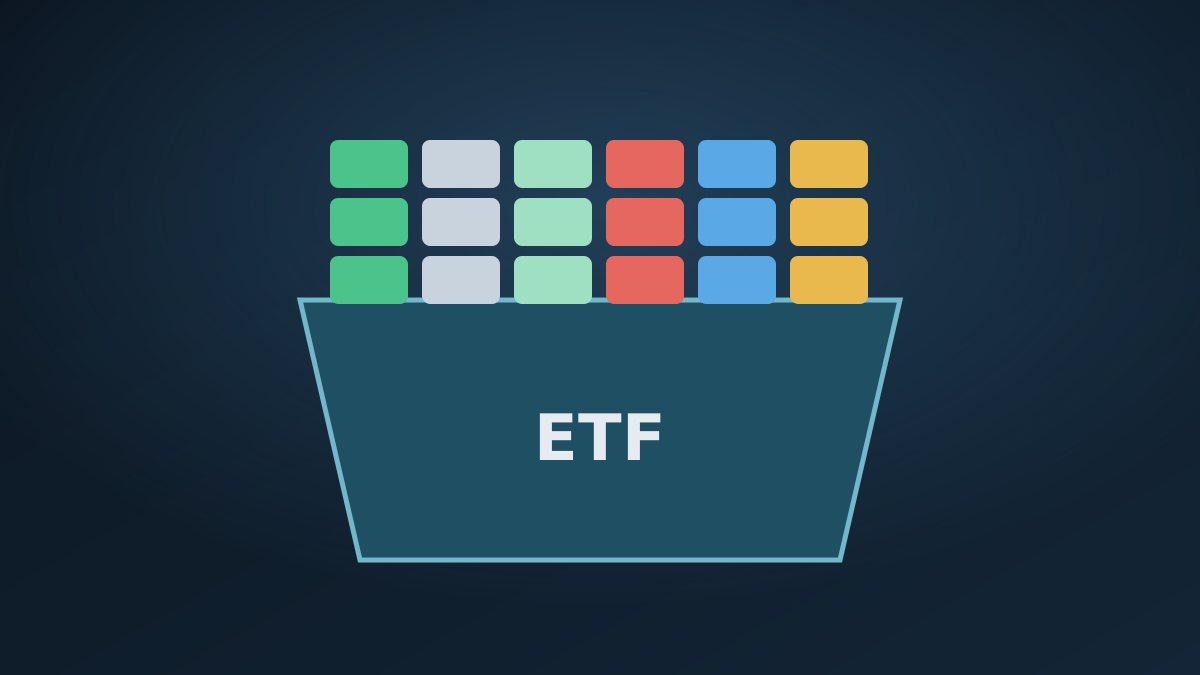
- An exchange-traded fund (ETF) holds a basket of assets, such as stocks, bonds or gold, and trades on a stock exchange.
- Most ETFs track an index, like the S&P 500, and charge low yearly fees.
- You can buy and sell ETFs all day at market prices, unlike traditional mutual funds.
- Check the expense ratio, what the ETF holds, and its trading volume before buying.
How an ETF works
When you buy one share of an ETF, you own a small slice of everything the fund holds. An S&P 500 ETF holds about 500 US companies; a gold ETF holds gold bars in a vault; a bond ETF holds hundreds of bonds. The fund publishes its holdings, often every day, so you can see exactly what you own.
Large financial firms called authorized participants can create or redeem ETF shares in big blocks. This mechanism keeps the ETF's market price close to the value of what it holds.
Types of ETFs
| Type | Holds | Example use |
|---|---|---|
| Broad stock index | Hundreds of stocks | Core long-term holding |
| Sector | One industry, such as energy | Targeted exposure |
| Bond | Government or corporate bonds | Income, lower volatility |
| Commodity | Gold, silver or futures | Diversification |
| International | Foreign stocks | Global diversification |
| Leveraged / inverse | Derivatives | Short-term trading only |
Leveraged and inverse ETFs reset daily and can lose value over time even if the market goes your way. The SEC and FINRA warn that they are not designed for long-term investors.
ETF vs. mutual fund
| ETF | Mutual fund | |
|---|---|---|
| Trading | All day, at market price | Once a day, after the close |
| Minimum | One share, or less with fractional shares | Often a minimum first investment |
| Fees | Often very low for index ETFs | Range from very low to high |
| Taxes in a regular account | Usually more tax-efficient | Can distribute capital gains |
What to check before buying
- Expense ratio: the yearly fee as a percentage. Two ETFs tracking the same index can charge very different fees.
- Holdings: what the fund owns and how concentrated it is in its top positions.
- Trading volume and spread: popular ETFs trade with tight bid-ask spreads. See How to Read a Stock Quote.
- Tracking: how closely the fund has followed its index after fees.
Learn more in What Is an S&P 500 Index Fund? and Gold ETFs Explained.
This article is general education, not personalized financial advice. Read our editorial policy and disclaimer.